Marathon Cut-Off Times: What They Are and the Time Limits of Major Marathons
A cut-off time is the maximum time to finish a marathon or reach a checkpoint. What happens if you miss it, the minimum pace to hold, and the official 2026 time limits of 11 marathons.
A marathon cut-off time is a maximum time you must beat, either to finish the race (the time limit) or to reach a specific checkpoint, such as km 30. If you miss it, the organisers take you out of the race: you are no longer ranked, you usually lose the race's support and, if you carry on, you do so at your own risk. For a marathon, the limit is 6 hours in Paris, Lille or Nice-Cannes, and goes up to 8 hours in London or Athens. Here is what it means in practice, the official 2026 time limits of 11 marathons and how to work out the pace you need.
What is a marathon cut-off time?
There are two kinds:
- The overall time limit: the maximum time to reach the finish line. At the 2026 La Rochelle Marathon it is 5 h 30. In London, 8 hours.
- Intermediate cut-offs: checkpoints on the course, each with a maximum passing time. Lille has them at km 10, at halfway and at km 30. Nice-Cannes at km 10, 21.1, 30 and 35.
The reason is safety. Roads reopen to traffic and the organisers' resources (medical teams, aid stations, marshals) are withdrawn. In Chicago, for example, the course reopens to traffic after the time limit. In Boston, traffic control and support end about six hours after the last participant crosses the start line.
The time isn't counted the same way everywhere, and that is the first trap:
- From your start or the gun. Tokyo, for example, gives 7 hours from the 9:10 am start, so a finish before 4:10 pm.
- From when you cross the start mat. Berlin gives 6 h 15 from the moment you cross the starting mat.
- From the start of the last participant. Paris, London and Boston work like this: the time limit is counted from the last runner crossing the start line. A runner in an early wave therefore has a little more time than the headline number.
What happens if you miss the cut-off time?
It depends on each race's rules:
- Paris: the participant is removed from the event, not ranked, gets no medal, and carries on at their own risk, without help from the organisers.
- Lille: the bib and chip are removed and the runner is considered out of the race. Shuttles pick up runners who are outside the cut-offs.
- Nice-Cannes: the chip is removed and the runner is declared out of time, with no appeal. If they carry on, it is entirely at their own risk. They can also drop out and take the train back to the start or finish with their bib.
- La Rochelle: safety is no longer guaranteed and participants are taken out of the race.
- Berlin: a runner who doesn't reach the km 33 checkpoint in time is withdrawn from the race and escorted to the finish.
- Chicago: a runner who finishes outside the limit may not be recorded as an official finisher and no longer gets full aid station and safety support.
- New York: a runner who crosses the line after 10 pm still gets a finisher medal, but no official result.
- Boston: someone who finishes after the cut-off time is a "post-race participant" and doesn't appear in the official results.
In every case the outcome is the same: a runner outside the limit can no longer count on the race.
Time limits of the major marathons in 2026
Here are the time limits from the 2026 rules:
- Paris Marathon (April 12): 6 hours counted from the last participant crossing the start line.
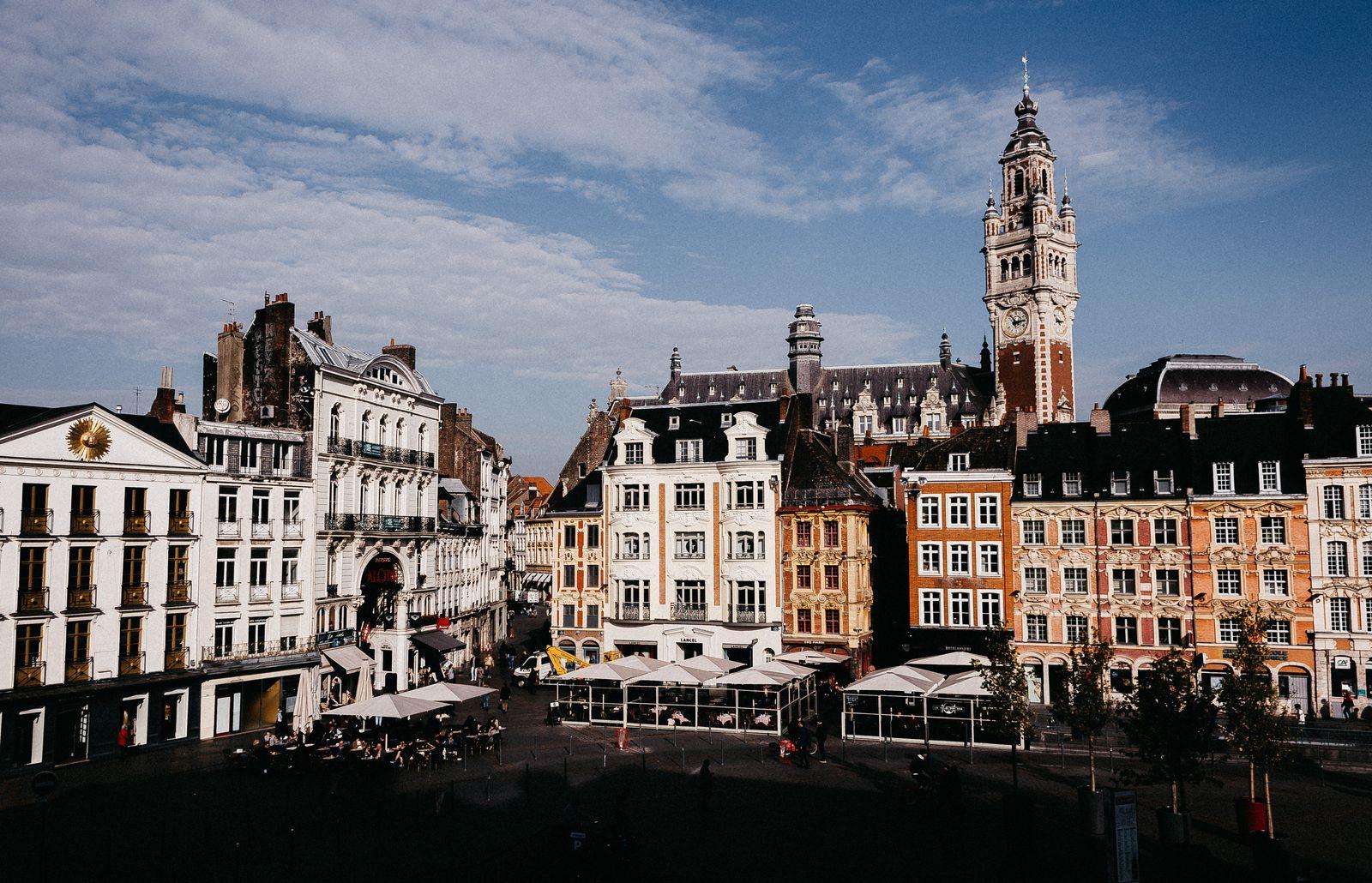
- Lille Marathon: 6 hours. Compulsory passing times of 1 h 25 at km 10, 3 h 00 at halfway and 4 h 16 at km 30.
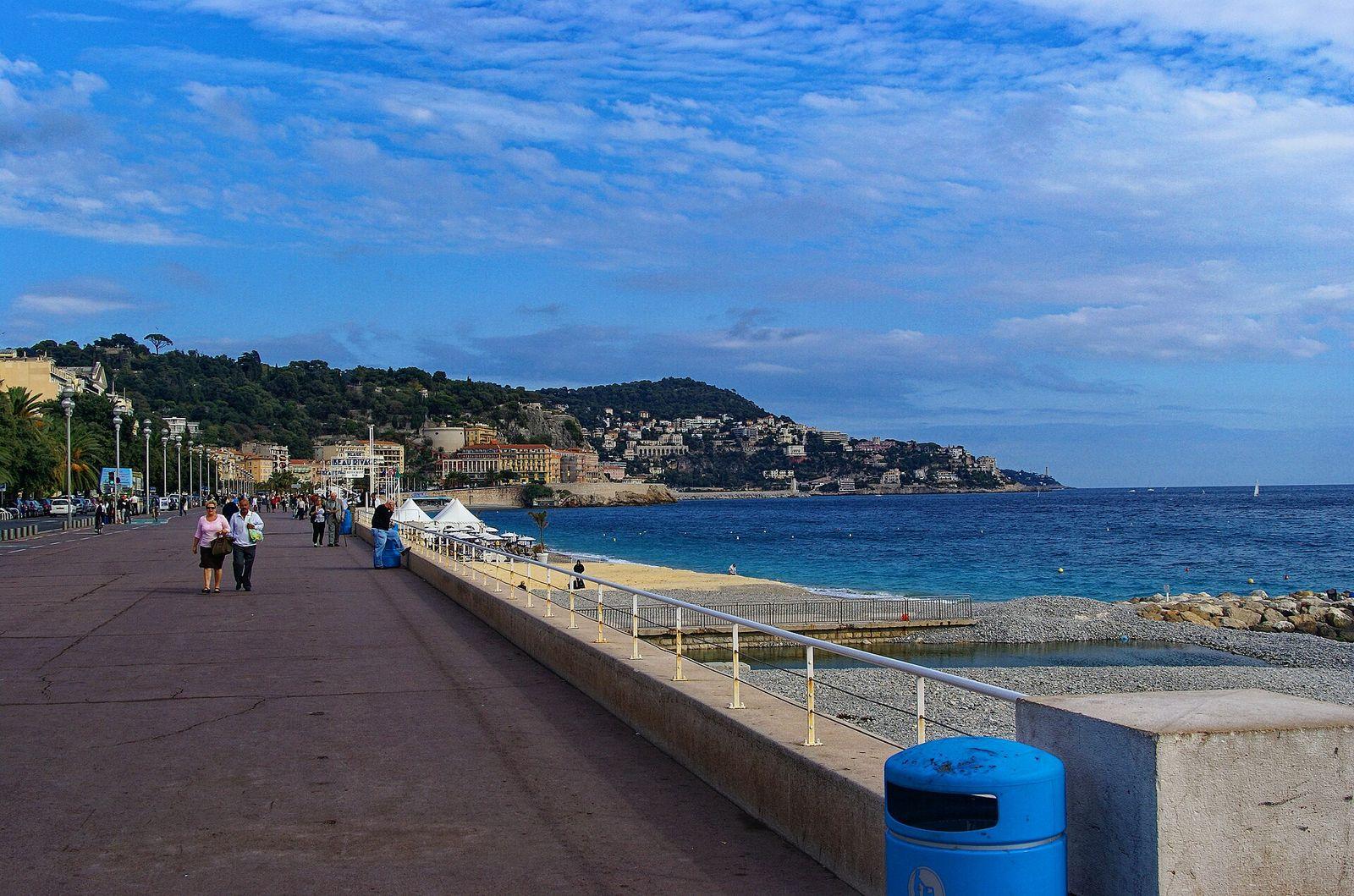
- Nice-Cannes Marathon (November 8): 6 hours. Cut-offs at km 10, 21.1, 30 and 35, with reference times of 1 h 25 min 43 s at km 10, 3 h 00 at km 21, 4 h 17 min 09 s at km 30 and 5 h 00 at km 35.
- La Rochelle Marathon (November 29): 5 hours 30, with a check at km 30 at 4 h 00.
- Athens Marathon (November 8): 8 hours, with all finishes closed at 6:15 pm, allowing for the delay of the later waves (starts until about 10:15 am).
- BMW Berlin Marathon: 6 h 15 from crossing the starting mat, with a checkpoint at km 33 at 3:40 pm and an official finish until 5:00 pm.
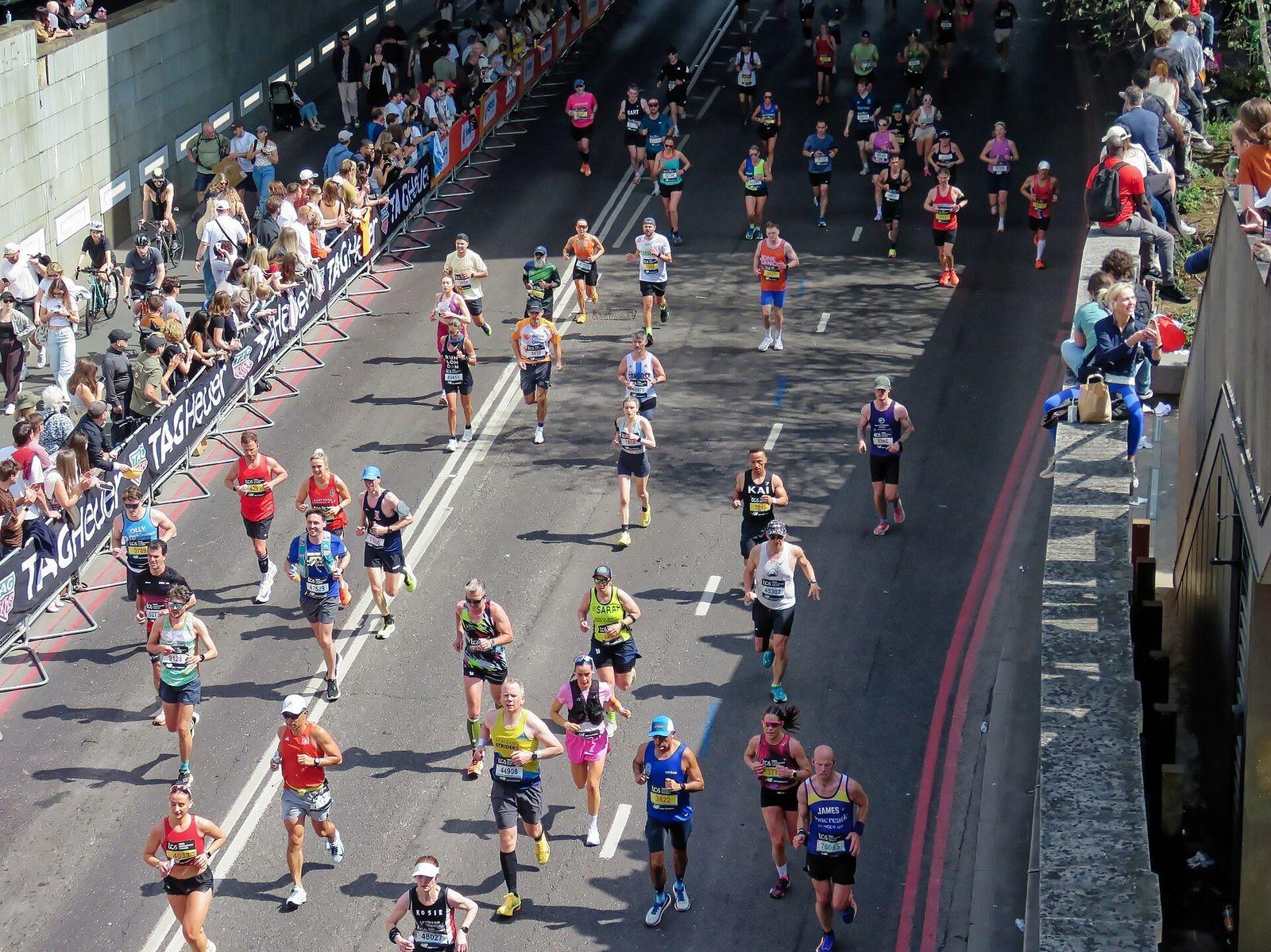
- TCS London Marathon: 8 hours after the last participant starts, at 11:30 am, so 7:30 pm on The Mall.
- TCS New York City Marathon: official results are recorded until 10 pm, whatever the wave. The course is designed to stay open for a pace of about 16 minutes per mile from the start of the last wave.
- Bank of America Chicago Marathon: 6 h 30, a pace of about 15 minutes per mile.
- Boston Marathon: official finish before 5:30 pm, about six hours after the last participant crosses the start line.
- Tokyo Marathon: 7 hours from the 9:10 am start, so 4:10 pm, with intermediate cut-offs on the course.
Organisers can change these rules from one edition to the next. Before you register, read the rules of your race.
How do you calculate the minimum pace to beat the cut-off?
Divide the time limit by 42.195 km. Here is the minimum average pace for each limit, if time is counted from your start:
- 5 h 30: 7 min 49 s per kilometre
- 6 h 00: 8 min 32 s per kilometre
- 6 h 15: 8 min 53 s per kilometre
- 6 h 30: 9 min 15 s per kilometre
- 7 h 00: 9 min 57 s per kilometre
- 8 h 00: 11 min 23 s per kilometre
That is the minimum average pace, not a target. Keep a margin: walking through aid stations, a toilet stop or a rough patch after km 30 can easily eat ten minutes. For races that count from the last participant's start (Paris, London, Boston), your real time limit depends on your wave: the earlier you start, the more time you have.
Where intermediate cut-offs catch people out
The km 30 cut-offs are close to the pace of the time limit. In Lille, reaching km 30 in 4 h 16 equals 8 min 32 s per kilometre, exactly the pace of a 6-hour marathon. In Nice-Cannes, 4 h 17 min 09 s at km 30 works out at about 8 min 34 s per kilometre. A runner holding an even pace passes the check without trouble. The runner who gets caught is the one who falls apart after km 30.
In La Rochelle, the km 30 check is set at 4 hours for a 5 h 30 limit. A runner holding an even pace for 5 h 30 gets there in about 3 h 55, but if they arrive at exactly 4 hours, they still have 12.195 km to run in 1 h 30, about 7 min 23 s per kilometre. The check doesn't protect them: they have to speed up.
The course, schedule and cheering spots are in our guide to the La Rochelle Marathon 2026.
How do you avoid being caught by the cut-off?
- Check how time is counted: from your start, the gun or the last participant. It changes your deadline.
- Write down the cut-off at each checkpoint, not just at the finish. For La Rochelle, that is 1:00 pm at km 30 with a 9:00 am start.
- Start at a pace you can hold to the end. The km 30 cut-off mostly punishes a fast start followed by a collapse.
- Give a realistic goal time when you register. In La Rochelle and Nice-Cannes, your pen or wave depends on it.
Supporters: tracking your runner before the cut-off
If your runner is close to the limit, the reading at the last mat before the cut-off is the one to watch. Live tracking only updates at the timing mats, sometimes every 5 km. Our guide on how to track a runner during a race explains how to add location sharing to the official tracking.
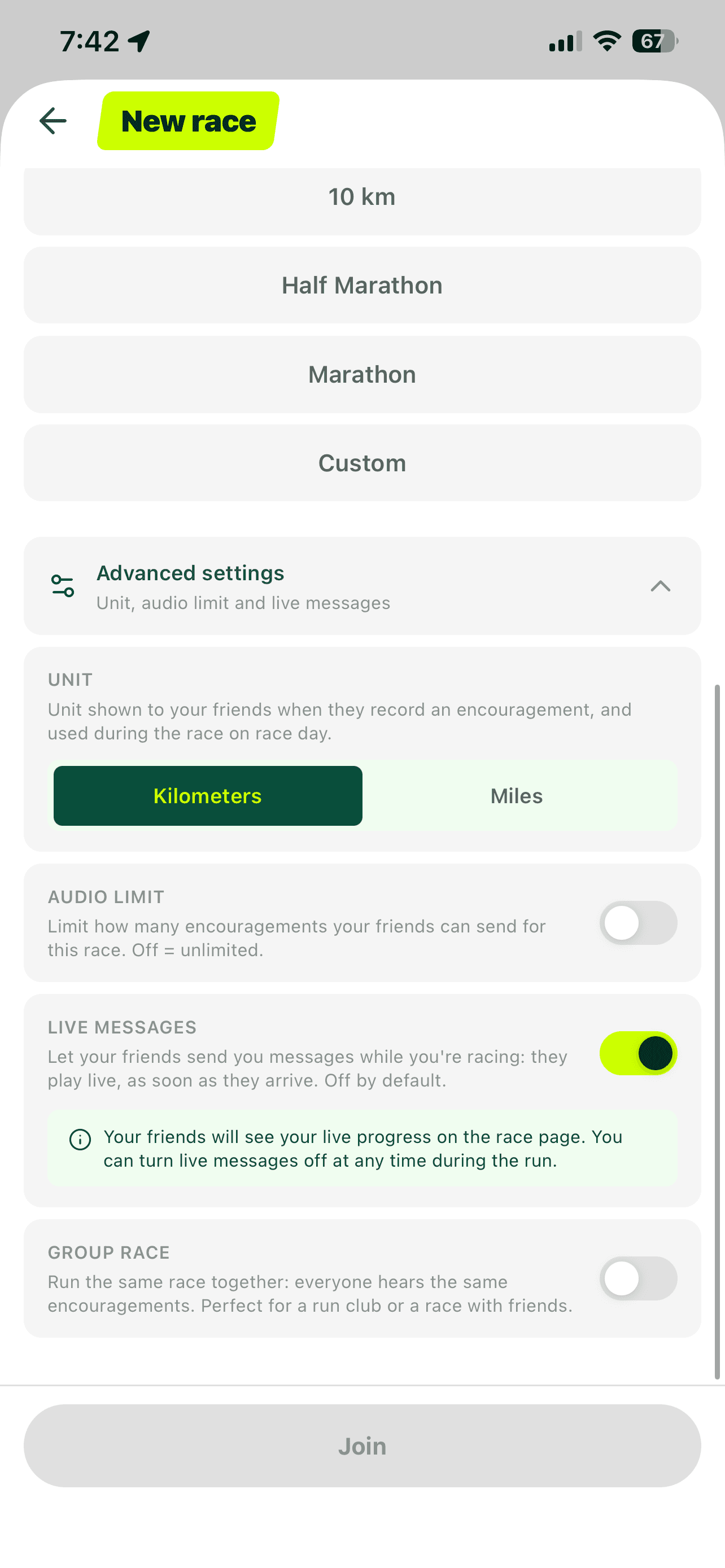
With Cobbr, your friends and family can also record voice messages ahead of time and choose the kilometre where your runner will hear them in their headphones. A message just before a cut-off, at km 28 or 29 for a check at km 30, helps them not to slow down at the wrong moment. For words that work, browse our encouragement messages for runners and read how live messages while you run work.
More marathon guides
We have also detailed passing times, the course and the best places to cheer for several races: the Lille Marathon, the Nice-Cannes Marathon, the Athens Marathon, the NYC Marathon and the Berlin Marathon. If you are training for a first marathon alone, these tips for running a marathon solo will help you hold your pace.
FAQ
What is a cut-off time in a marathon?
It is a maximum time to respect: either to finish the race or to reach a checkpoint. Beyond it, the runner is taken out of the race, not ranked, and the organisers' support stops.
What is the cut-off time of the Paris Marathon?
6 hours, counted from the last participant crossing the start line, according to the rules of the April 12, 2026 edition.
What minimum pace do you need to finish a marathon in 6 hours?
8 min 32 s per kilometre on average, about 7 km/h.
Can you finish a marathon after the cut-off time?
It depends on the race. Some let the runner continue at their own risk, without ranking or support. Others, like New York, record an unofficial finish and still hand out the medal.
Are there intermediate cut-offs?
Yes, at many marathons. Lille has them at km 10, at halfway and at km 30, Nice-Cannes at km 10, 21.1, 30 and 35, Berlin at km 33.
Cover photo: Acabashi / Wikimedia Commons, CC BY-SA 4.0. Body photo: William Murphy / Wikimedia Commons, CC BY-SA 2.0.