Lille Marathon 2026: the comeback – course, cheer spots & support from afar
On October 25, 2026, the Lille Marathon returns after 31 years. A very flat course, cut-off times, the best places to cheer, and voice messages from the people who cannot be there.
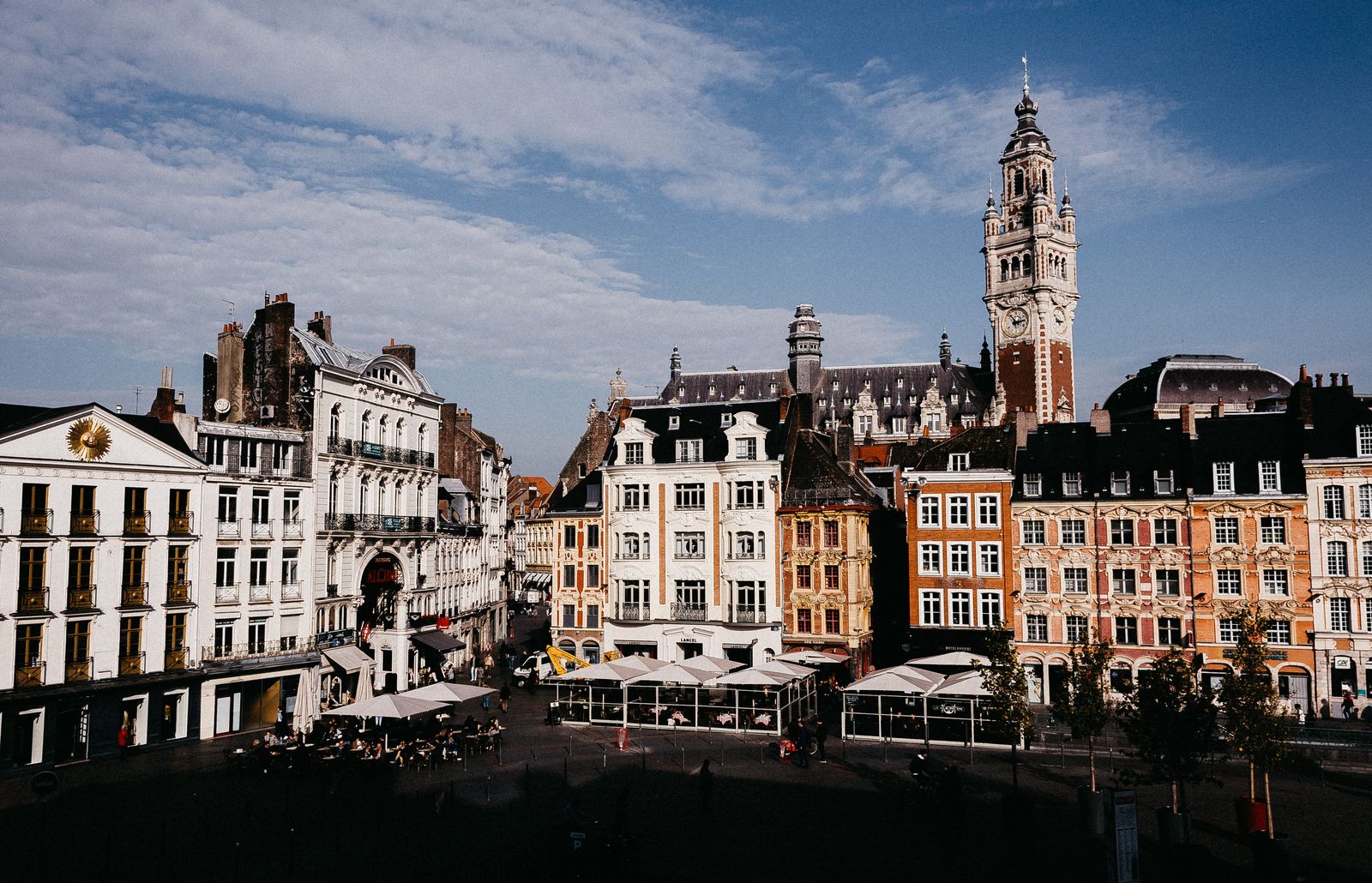
On Sunday, October 25, 2026, Lille gets its marathon back. The Trek Marathon de Lille, an FFA Gold Label race, starts at 11:15 am on Boulevard de la Liberté for 42.195 km across the Lille metropolitan area. For this comeback edition, organizers expect 20,000 marathon runners: the race is sold out and, according to the City of Lille, becomes the second-largest marathon in France after Paris.
Whether you are running or coming to support someone, here is what you need to know: the course, the cut-off times, the best places to cheer, and how to bring along the voices of the people who cannot be at the roadside.
Lille Marathon 2026 at a glance
- Date: Sunday, October 25, 2026
- Marathon start: 11:15 am, a single start for all corrals, at 215 Boulevard de la Liberté
- Half marathon start: 8:30 am, same place
- Finish: Esplanade du Champ de Mars, next to the Citadel, where the race village is set up
- Field: 20,000 in the marathon, 15,000 in the half, 77 nationalities
- Organizer: Ligue Hauts-de-France d’Athlétisme
- Time limit: 6 hours
- Bib pickup: Esplanade du Champ de Mars, Thursday October 22 to Saturday October 24, plus Sunday morning for marathon runners only
One thing to watch: clocks go back one hour in France overnight from October 24 to 25. Your body will feel like it is starting at 12:15, which matters when you plan breakfast.
The comeback after 31 years
The Lille Marathon ran from 1986 to 1995, then stopped for logistical and budget reasons. Back then, around 2,000 runners took part. This time the field is ten times larger: the City says 18,000 bibs went in two hours when registration opened, and the cap was later set at 20,000.
The race records still date from that first era: 2:13:08 for Austrian Helmut Stuhlpfarrer and 2:33:58 for Chantal Langlacé, set at the very first edition in 1986. On a course built for fast times, both could fall this year.
If you do not have a bib yet, it is too late: every race is sold out, and the official Swika resale platform closed on October 4. Running on someone else’s bib means disqualification.
The course: a very flat loop through the metropolis
Organizers promised an “ultra flat” course, and the official route the league published on OpenRunner backs that up: 149 m of total elevation gain for the whole loop. Around 20 km are run inside Lille (the first 12 and the last 8), and the rest through nine towns south of the city.
Km 0 to 12: central Lille
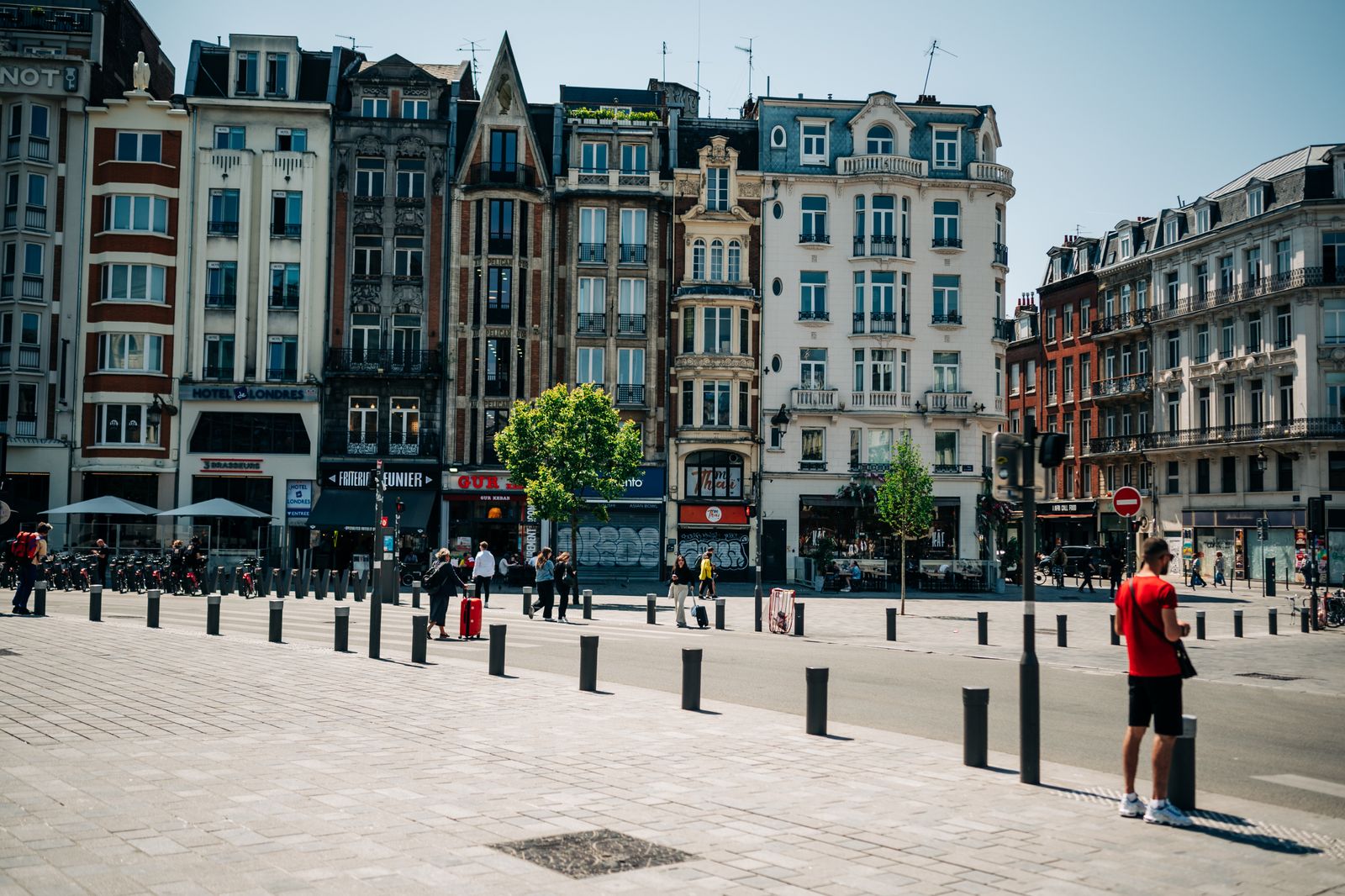
The start is on Boulevard de la Liberté, then Boulevard Louis XIV, past Lille-Flandres station, Rue Faidherbe, Place du Théâtre, the Grand Place and Rue Nationale. The route then runs along the Citadel park on Boulevard Vauban, before Rue de Solférino, Place Sébastopol and Boulevard Victor Hugo. Plenty of long straights, chosen to let the field spread out.
Km 12 to 35: the southern suburbs
Around km 12, the course heads to Lille-Sud and Faches-Thumesnil. It skirts Loos and Emmerin, crosses Noyelles-lès-Seclin and Houplin-Ancoisne, and reaches Seclin between km 24 and 27. It then turns north through Templemars, Wattignies, Faches-Thumesnil again and Ronchin. France 3 describes this more rural section as exposed to the wind, so keep that in mind if the weather turns.
Km 35 to the finish: back into town
Km 35 is in the Lille-Moulins district. The way back follows Boulevard Jean-Baptiste Lebas, passes near the town hall and the station, returns through the Grand Place and Rue Nationale, then takes Boulevard de la Liberté and the Citadel bridge to the Champ de Mars.
Race strategy
Start and corrals
There are no waves: everyone goes on the gun, and organizers expect the full field to need 20 to 25 minutes to cross the line. Be in your corral 30 minutes before the start. Pacers, easy to spot with a flag on their back, cover every target from 2:45 to 5:30 in 15-minute steps.
Cut-off times
- Km 10: 1:25 maximum
- Halfway: 3:00 maximum
- Km 30: 4:16 maximum
- Finish: 6:00
If you start near the back, remember that those 20 to 25 minutes of waiting at the start can eat into your margin for the first cut-off.
Aid stations
There is an aid station every 5 km from km 5, with bottled water and food, plus refreshment points halfway between them (km 7.5, 12.5, 17.5, 22.5, 27.5, 32.5 and 37.5). Toilets are available at aid stations, at the start and at the finish. On a course this flat, the real trap is going out too fast on the buzz of the city center: hold your pace until Seclin, then see what you have left.
Where to cheer on the course
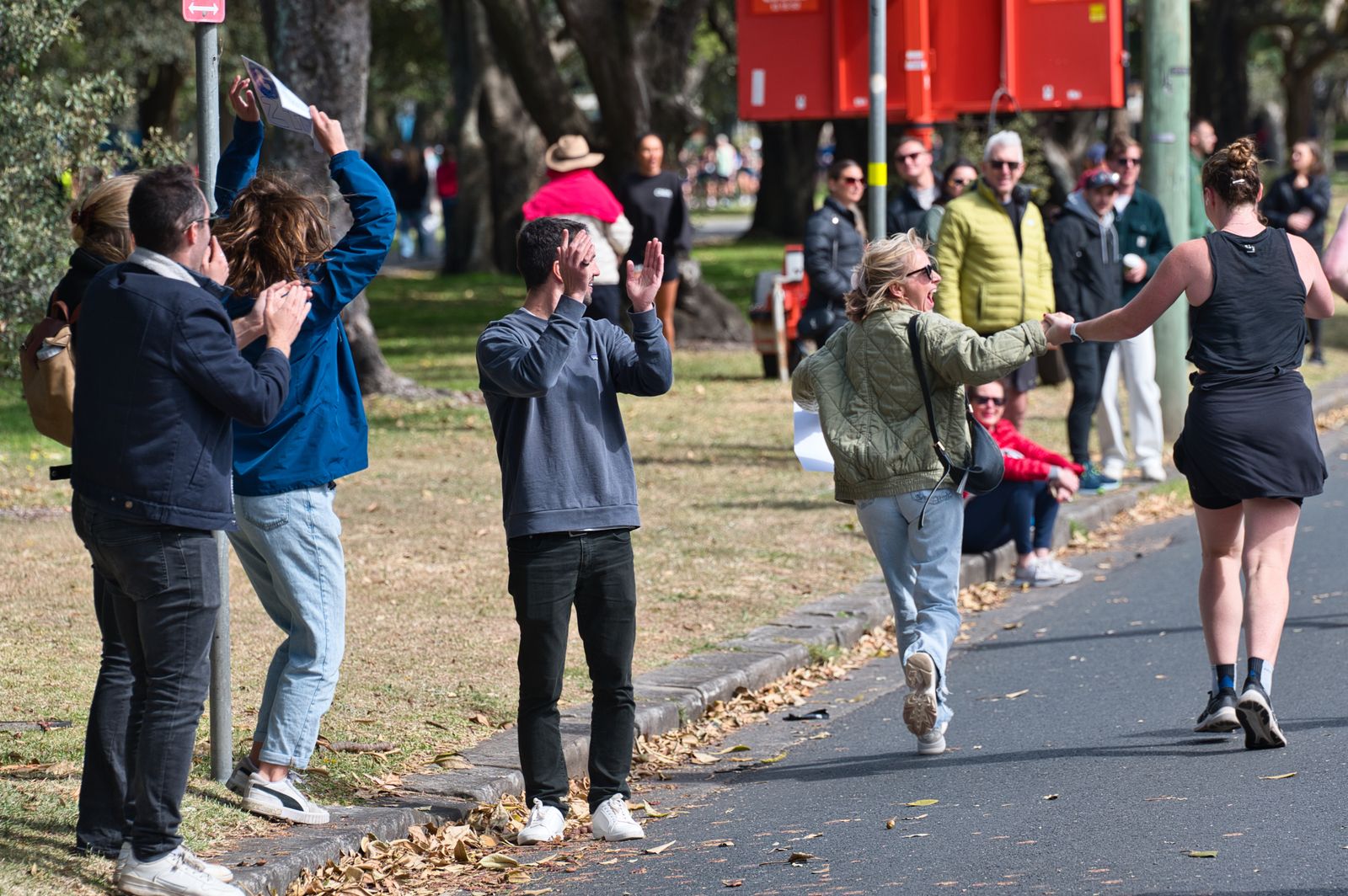
Supporters are not allowed to follow a runner along the course by any means of transport, so it pays to pick your spots in advance.
- Grand Place and Rue Nationale: the best option in the center, since runners pass through in the early kilometers and again near the end. You can see your runner twice without moving.
- Boulevard Vauban, along the Citadel: more open than the old town, in the first part of the race.
- Seclin, km 24 to 27: Rue des Martyrs, Rue Roger Bouvry, Boulevard Joseph Hentgès. This is where the legs start to feel heavy, and the town of Seclin is already inviting residents to line the route.
- Boulevard Jean-Baptiste Lebas, after km 35: one last boost before the run back toward the station.
- Champ de Mars: the finish and the official meeting point, at the exit of the finish area.
To estimate passing times, start from 11:15 and add the wait at the start depending on the corral. As a rough guide, at an even pace and not counting that wait, a 4-hour runner reaches km 25 around 1:37 pm and km 35 around 2:34 pm; for 3:30, count roughly 1:19 pm and 2:09 pm. The live tracking announced on the official website will help you fine-tune on race day. To reach the start, organizers recommend the metro: République Beaux-Arts (line 1) and Mairie de Lille (line 2).
Looking for more supporter planning ideas? Our guide to the best spectator spots at the 20 km of Brussels uses the same logic: one spot before halfway, one in the final third.
Support from afar when your people cannot make it
With 77 nationalities on the start line and hotels already full, many runners will travel without their families. The whole race will be broadcast live on France 3, which lets people follow the atmosphere from home, but not cheer for one runner in particular.
That is where Cobbr comes in. Your friends and family record voice messages before the race and pick the kilometer where each one plays: in Seclin to get past halfway, around km 30 for the tough patch, or on Boulevard Jean-Baptiste Lebas for the final stretch. On race day, you hear their voices in your earphones at the right moment, without touching your phone.
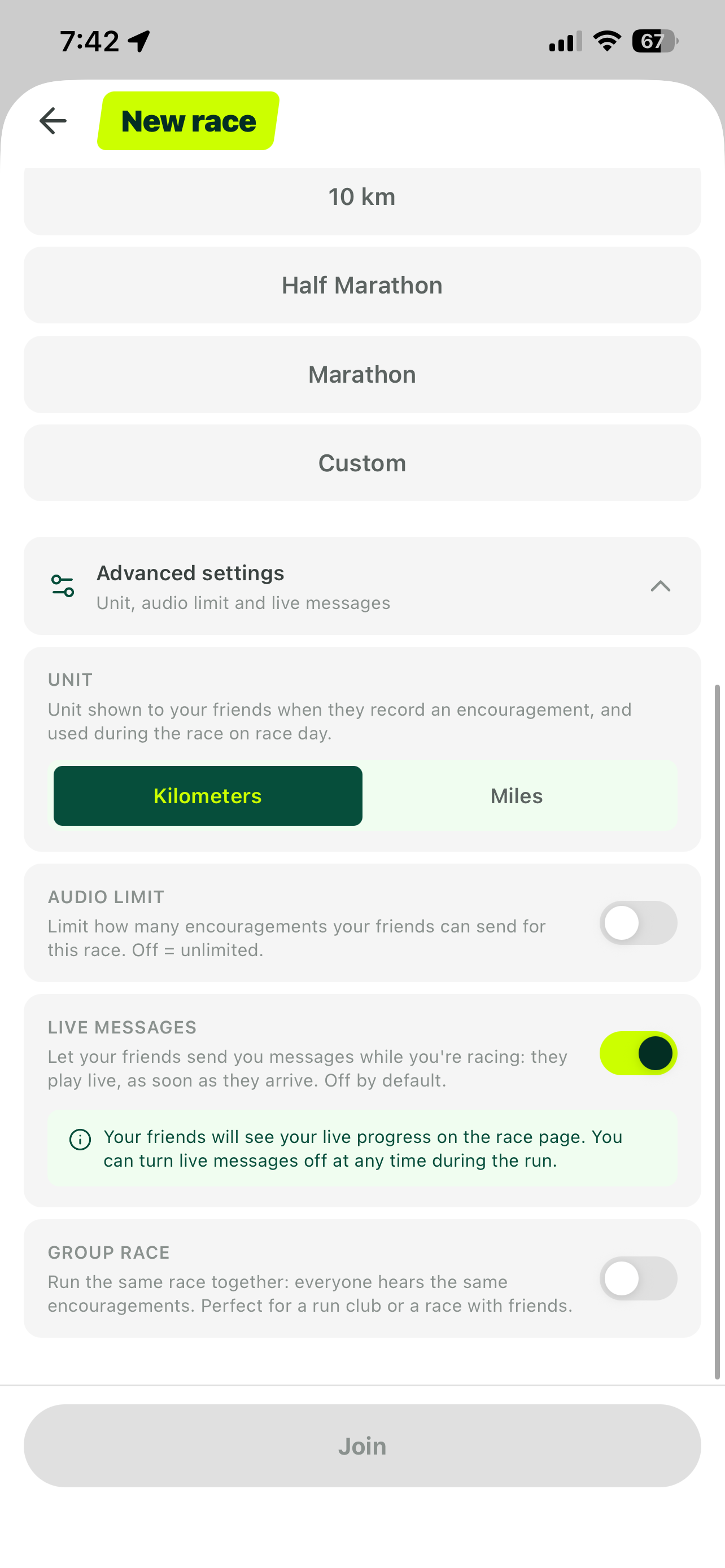
Live messages
If you turn on live messages, they use the same supporter link to send you voice notes during the race, played as soon as they arrive. Perfect for anyone following you on live tracking or watching France 3. And if you are worried about the quieter suburban kilometers, our tips for running a marathon alone will help you stay strong mentally.
Lille and the other autumn marathons
Lille comes four weeks after the BMW Berlin Marathon 2026, another course famous for being flat, and after other big events such as the 20km de Paris. As with the first Avignon Marathon, whose 2026 results are already in, a comeback this anticipated is set to write a new chapter in local running history.
Summary
The Lille Marathon 2026 takes place on Sunday, October 25 at 11:15 am, from Boulevard de la Liberté to the Champ de Mars, on a loop with just 149 m of elevation gain. Pick up your bib before Sunday if you can, remember the clock change, note the cut-offs at km 10, halfway and km 30, and plan your support: Grand Place and Seclin for those who come, and your earphones with the Cobbr app for those who stay home.
Sources: marathon-lille.com (rules, FAQ), City of Lille, official OpenRunner route, Town of Seclin, actu.fr and France 3 Hauts-de-France.