TCS Sydney Marathon 2026: The 7th World Marathon Major
On August 30, 2026, run the 7th World Marathon Major through Sydney: from North Sydney Oval to the Sydney Opera House via the iconic Harbour Bridge. 313m of elevation gain, a challenging rolling course, and unforgettable scenery.
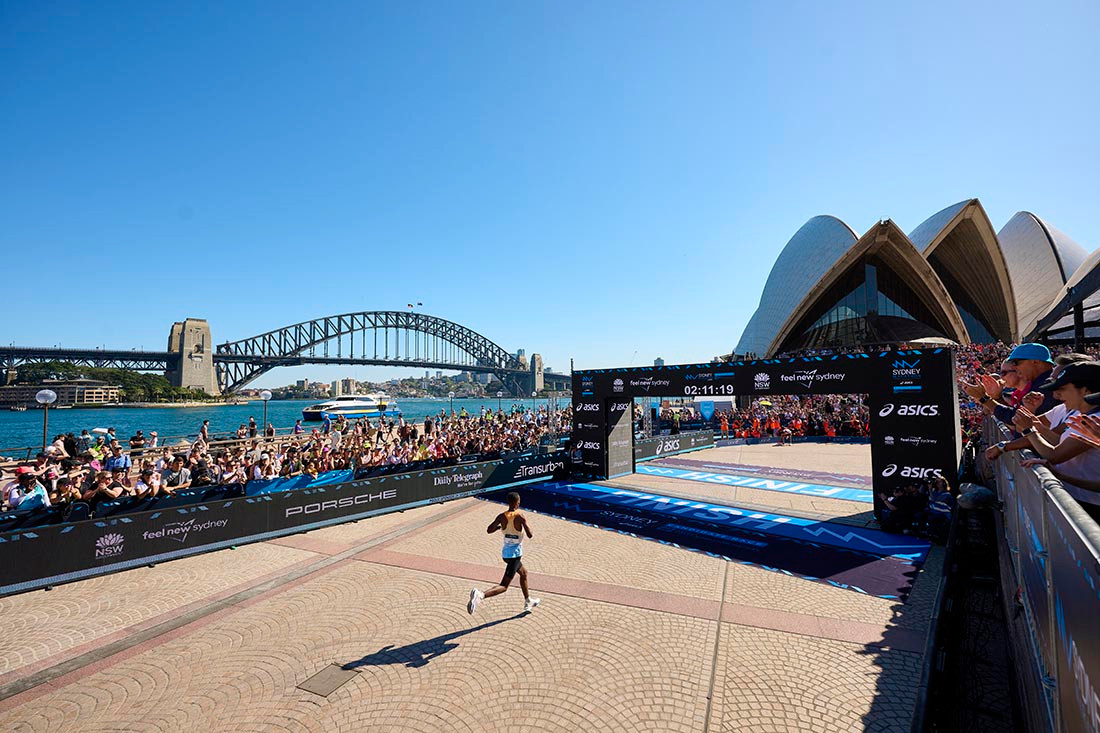
On August 30, 2026, Sydney hosts the second edition of its marathon as the 7th Abbott World Marathon Major. The course links North Sydney Oval to the Opera House forecourt via the Harbour Bridge, winding through Pyrmont, Barangaroo, The Rocks, and an out-and-back along Anzac Parade. The race largely follows the same route used during the Sydney 2000 Olympic Games. The 2025 edition drew 33,000 finishers from 156 countries, and expectations are even higher for 2026.
TCS Sydney Marathon 2026 by the numbers
42.195km point-to-point from North Sydney Oval to the Sydney Opera House. 313 metres elevation gain, 396 metres elevation loss, for a net elevation of -83 metres. Date: Sunday, August 30, 2026. Time limit of 7 hours. Registration fee: $280 AUD for Australian and New Zealand residents, $330 AUD for international runners. 40,000 participants expected. Terrain: 100% paved road. A rolling course that earns respect: technically demanding despite the net downhill profile.
Course breakdown
KM 0-3: Start and Sydney Harbour Bridge
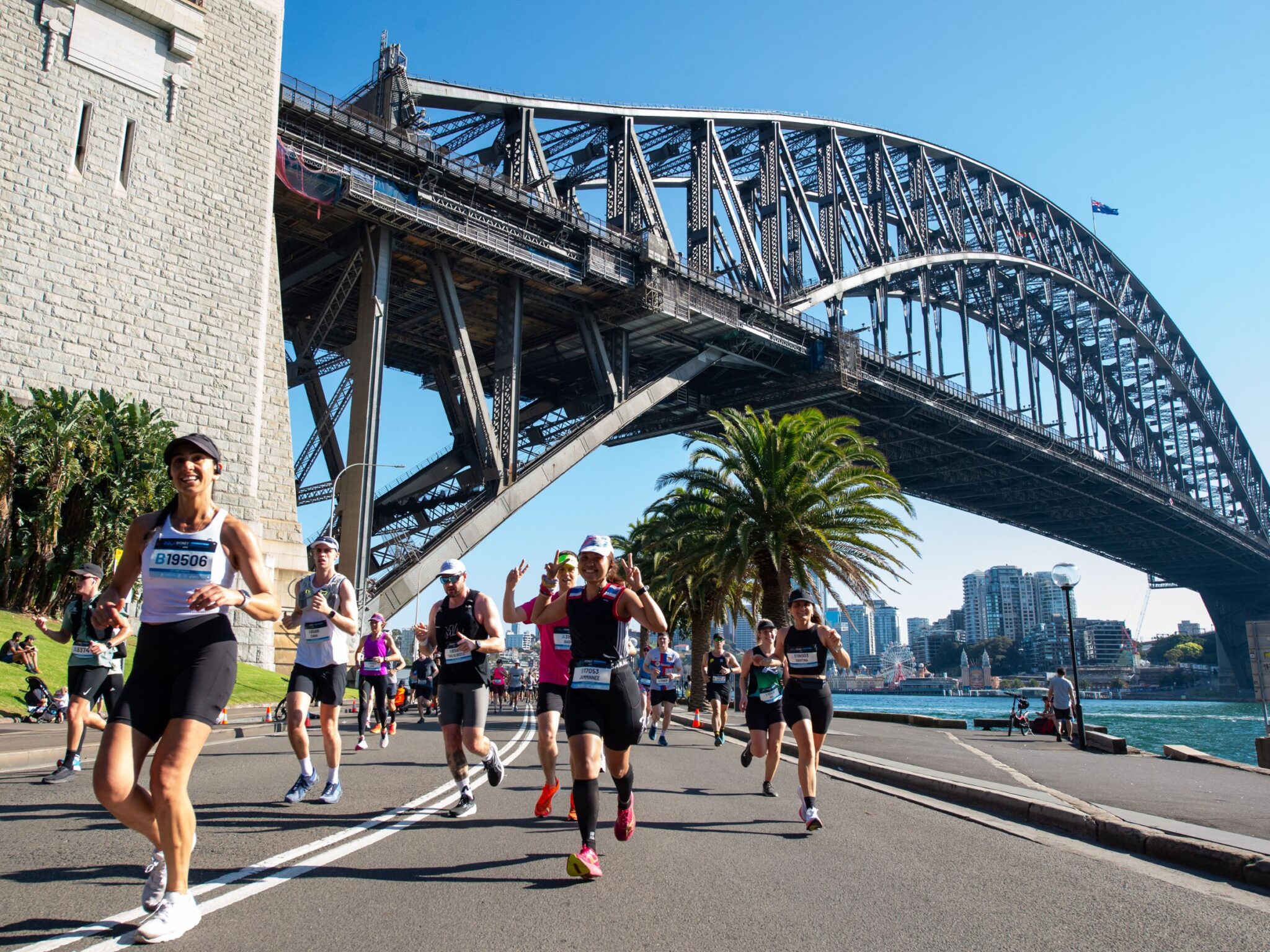
The start is on Miller Street next to North Sydney Oval, echoing the exact start line of the Sydney 2000 Olympic Marathon. You cross the Sydney Harbour Bridge between km 2 and 3, spanning roughly 500 metres with a steep drop in elevation: it's the single largest descent on the course. Hold back here: the 313 metres of total climbing ahead will punish an aggressive opening kilometre split.
KM 3-15: CBD and early neighbourhoods
After the bridge, the course winds through the CBD, where recent route changes have removed tight sections around Darling Harbour and Pyrmont in favour of longer, straighter roads. The route passes through historic precincts like The Rocks and Circular Quay, the bustling CBD, then past Hyde Park. At the 15km mark, the course tilts upwards on Oxford Street, one of Sydney's most colourful and energetic avenues. It's a climb that demands effort, but the reward comes quickly with a downhill stretch.
KM 16-28: Anzac Parade, the stretch that defines your race
Anzac Parade runs approximately 12 kilometres as a long, wide, straight stretch of road that replaced some of the tighter previous sections. Kilometre markers at 18, 20, 22, 24 and 26 are your checkpoints through this segment. Crowd support is strong until you turn onto Anzac Parade at 16km, where the road widens and spectators thin out for the next 12 kilometres. A long, straight and relatively flat stretch along Anzac Parade takes runners through halfway and beyond. This fast section is ideal for finding consistency, but the mental challenge kicks in with a 180-degree turn back towards the city, forcing athletes to reset and push on.
KM 28-34: Centennial Park and rolling hills
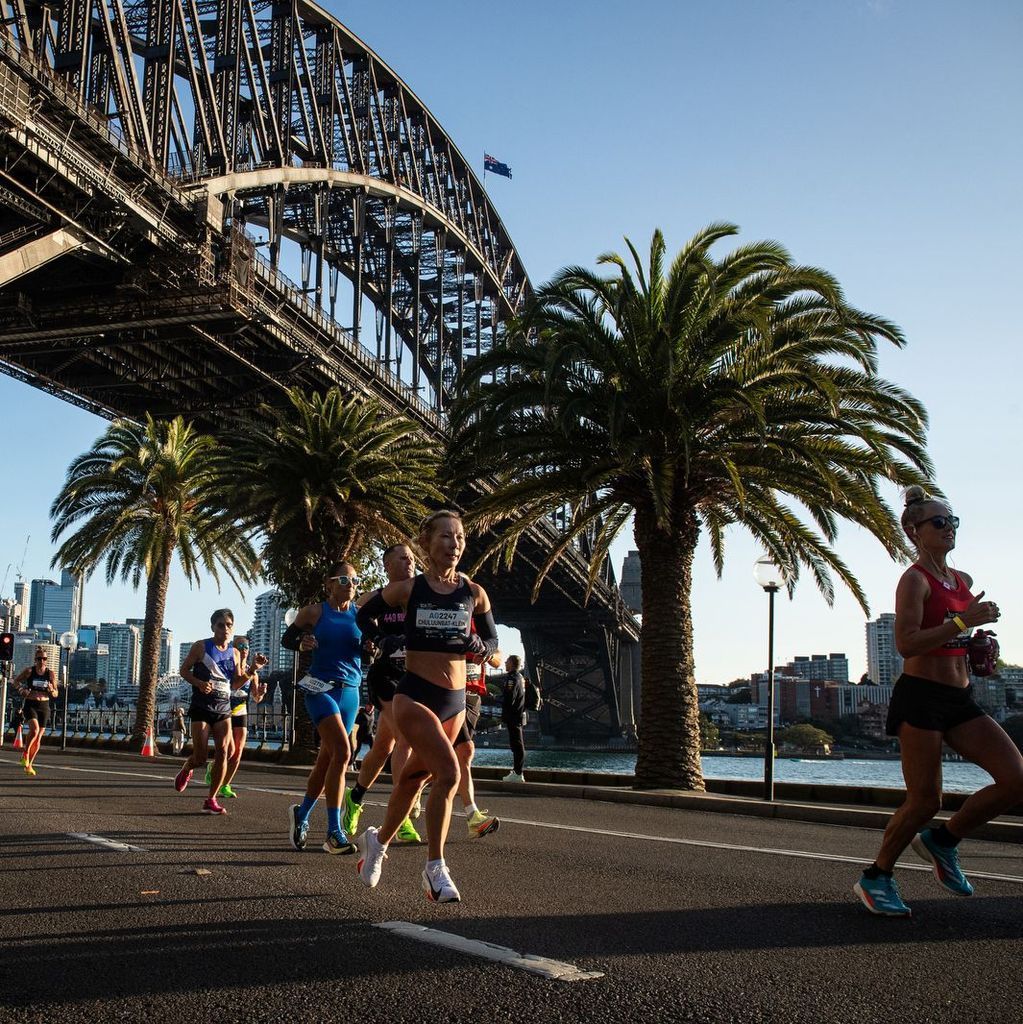
You pass the Sydney Swans Zone at 29.4km before entering Centennial Park for a single loop between 30km and 34km. The course previously included more laps here, but organisers trimmed it to one. The park roads are shaded in sections, which is welcome if the morning sun has been building. Rolling hills through here will test your legs at a point where glycogen is depleting.
KM 34-42: Oxford Street climb and the Opera House finish
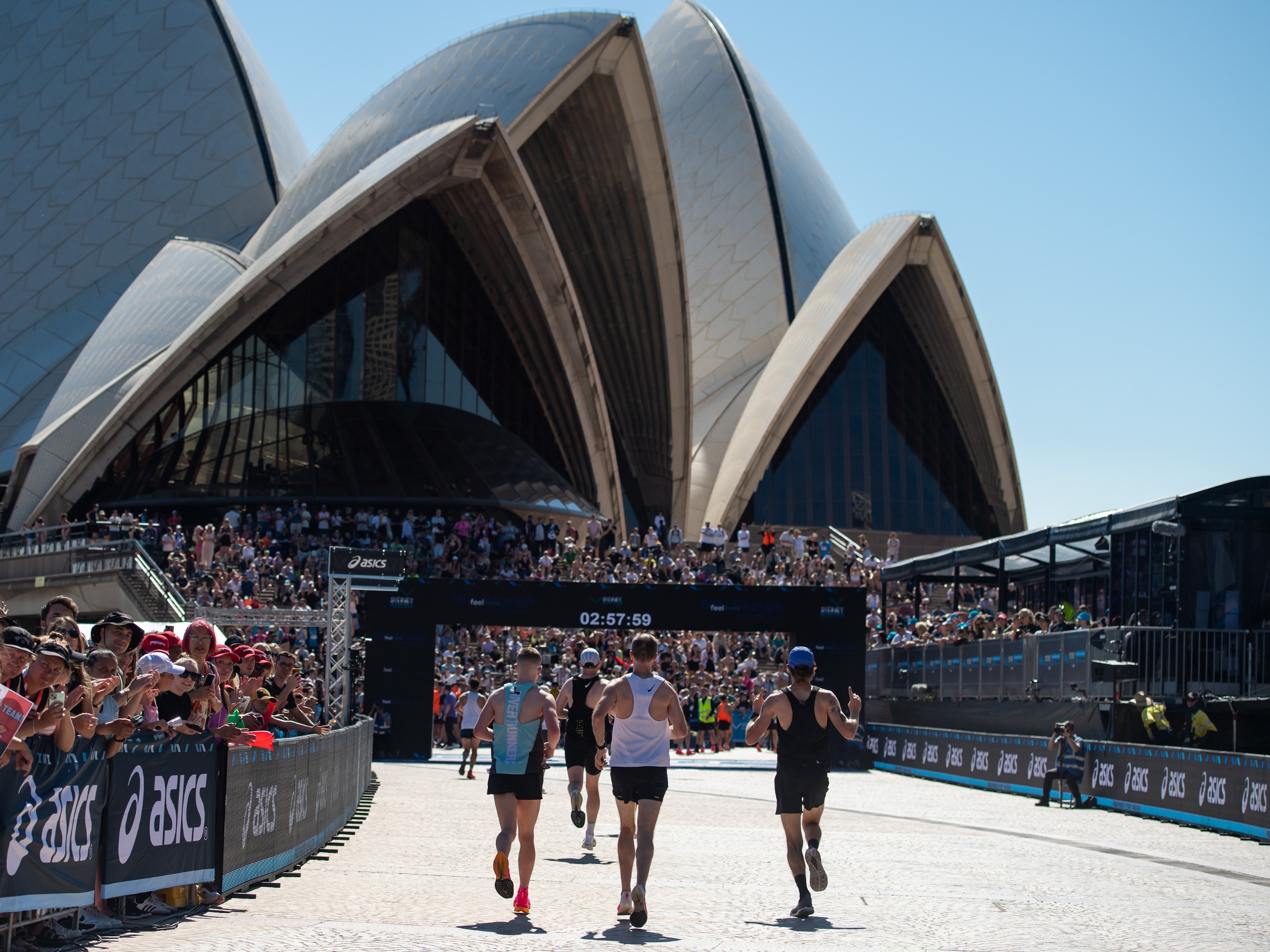
After leaving the park, you run the decisive Oxford Street climb between kilometres 35 and 40 before descending to the Opera House finish. The biggest late-race challenge: a climb at Art Gallery Road near Mrs Macquarie's Chair around the 40km mark. The marathon finishes dramatically at the Sydney Opera House forecourt, framed by the Harbour and Circular Quay—one of the most scenic finish lines in global road running.
What weather to expect
Late August in Sydney typically offers ideal marathon conditions. Average high temperatures around 20°C, lows around 10°C. Precipitation remains low (0.4mm/day on average), with only 14% of days seeing notable rain during this period. Wind can blow at around 22 km/h average maximum.
Plan layers for the early start: it can be cool in North Sydney at sunrise. A light, breathable kit will be perfect once the sun is up. Sydney's sun sits low on the horizon during early morning hours. With an east-facing finish and exposed sections along Anzac Parade and through Centennial Park, glare can be an issue, particularly as the morning progresses past 9am. Consider appropriate sunglasses.
Race strategy and tips
Manage the Harbour Bridge descent
The bridge span covers roughly 500 metres with a steep drop in elevation, the single largest descent on the course. Hold back here: the 313 metres of total climbing ahead will punish an aggressive opening kilometre split. Don't be fooled by the net downhill into thinking this is an easy PR course—it's far from flat.
Stay focused on Anzac Parade
Anzac Parade runs approximately 12 kilometres as a long straight stretch. Use each 2km split to track pace against your target rather than relying on feel, because the uniform scenery makes perceived effort unreliable over this distance. This 12 km stretch is flat but mentally grinding—exposed to sun and wind with reduced spectator density. Pacing discipline here makes or breaks your race.
Bring your own gels
Powerade (Mountain Blast flavour) will be available at the 5km, 10km, 15km, 20km, 25km, 30km, 35km and 40km drink stations along the course and at the finish line recovery area. GU Energy Gels are available at the 20km and 30km drink stations only. If you follow a standard fueling plan (consuming a gel every 30-45 minutes), you MUST carry your own personal gel supply. Relying solely on official aid stations leaves a 10-kilometre gap during the hardest climb up Oxford Street (km 34-40).
Save energy for km 35-40
The final Oxford Street climb arrives when you're already deep into the race. This is the section that breaks time goals or confirms strong performances. Don't spend all your effort on Anzac Parade. Keep something in reserve for the closing kilometres.
What makes this race special
The TCS Sydney Marathon became the seventh Abbott World Marathon Major in November 2024, joining Boston, London, Berlin, Chicago, New York and Tokyo—the first Australian event to earn the status. Running a World Major with views across Sydney Harbour and finishing in front of the Opera House is a rare experience. The race largely follows the same route used during the Sydney 2000 Olympics. Running a course with Olympic heritage is rare among city marathons, giving every kilometre a sense of history that goes beyond the distance itself.
The atmosphere is exceptional. Race organisers have installed spectator live sites at 11.9km and 13.1km in the Sydney CBD, and at 15.4km the Pride in Sport live site at Taylor Square. Bib collection and logistical details are communicated in the official race guide a few weeks before the event. Participants and spectators should only use public transport, with extra services running throughout the day. Travel on transport is covered for registered participants.
Getting encouragement during the TCS Sydney Marathon with Cobbr
Around km 20 on Anzac Parade where monotony can weigh heavy, or at km 38 when the Oxford Street climb tests you, encouragement makes the difference. With Cobbr, your loved ones can record voice messages that trigger automatically at the kilometre of their choice during your race. A vocal boost from your partner just before Mrs Macquarie's Chair or words of encouragement from your kids in Centennial Park—these familiar voices remind you why you're running and give you the energy to finish strong in front of the Opera House.
TCS Sydney Marathon 2026 FAQ
What is the TCS Sydney Marathon distance?
The course is 42.195km, from North Sydney Oval to the Sydney Opera House forecourt. It's a full marathon certified by World Athletics.
Is the TCS Sydney Marathon difficult?
The course has 313 metres of elevation gain and is significantly hilly. With 313 metres of elevation gain, two significant climbs—the Harbour Bridge early and Oxford Street late—and rolling terrain throughout, the Sydney Marathon is not a PR course. It's a demanding course that rewards strategy.
What is the Sydney Marathon time limit?
The TCS Sydney Marathon has a course time limit of seven hours from the closure of the start line at 8:40am. Anyone who does not cross the finish line by 3:40pm will receive a DNF as their official result. Intermediate cut-off points exist along the course.
Is the Sydney Marathon suitable for beginners?
With a 7-hour time limit, the course is accessible to runners capable of maintaining roughly 10 minutes per kilometre. But be aware of the profile: the 313m of elevation gain demands serious preparation, even just to finish. This isn't the easiest course for a first marathon.
What are typical weather conditions in August in Sydney?
Late August marks the end of winter in Sydney. Average high temperatures of 20°C, lows of 10°C. Low precipitation (0.4mm/day on average), with 14% of days seeing notable rain. Favourable marathon climate, cool in the morning and pleasant during the day. Watch for possible coastal wind (around 22 km/h average maximum).
How can encouragement help me during this race?
On a demanding course like Sydney, with isolated sections on Anzac Parade and a major final climb, encouragement from your loved ones at the right moment can restore the mental energy you need. Cobbr lets you receive these voice messages automatically at the kilometres you've chosen, without your supporters needing to be physically present on the course.
The TCS Sydney Marathon 2026 offers a unique World Major experience in the southern hemisphere. A demanding course, iconic scenery and an unforgettable finish in front of the Opera House. Train seriously, manage your effort intelligently, and savour every kilometre of this exceptional race.