Marathon de la Liberté: course analysis, profile, tips and best spectator spots
Discover our Marathon de la Liberté race analysis: course profile between Courseulles-sur-Mer and Caen, elevation, pacing strategy, marathon tips and the best places to cheer for your runners.
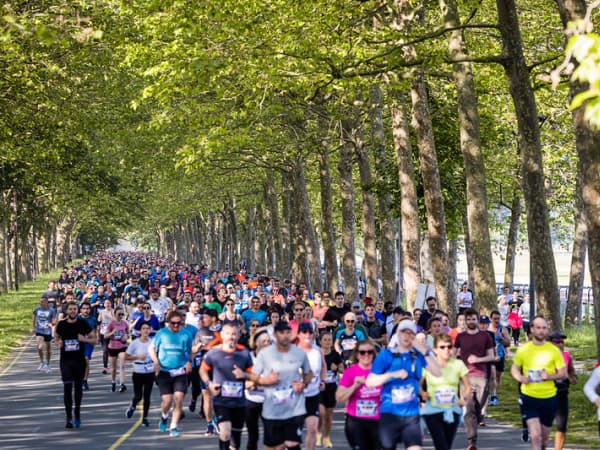
The Marathon de la Liberté is not your typical marathon. Between Courseulles-sur-Mer, the D-Day beaches, Ouistreham and a memorable finish in Caen, this race offers far more than a finishing time: it is a journey through history, emotion… and miles.
Often considered one of the most beautiful marathons in France, the Marathon de la Liberté connects the Normandy coastline to Caen on a fast course that is slightly trickier than it first appears. Because behind its generally accessible profile lies a tougher second half that can punish runners who mismanage their effort.
So, is it a fast marathon or a hidden trap? Where should you push? Where should you stay conservative? And where should supporters position themselves?
Let’s break it down.
A unique marathon between history, coastline and city streets
Created in tribute to the events of D-Day, the Marathon de la Liberté passes through several iconic Normandy locations: the D-Day beaches, Juno Beach, Sword Beach, Ouistreham, Pegasus Bridge and finally Caen.
The marathon itself remains the flagship event: 42.195 km from Courseulles-sur-Mer to Stade Hélitas in Caen.
And honestly, few marathons combine historical significance, coastal scenery, spectator atmosphere and an urban finish quite like this one.
Course analysis: a fast opening… followed by a tougher second half
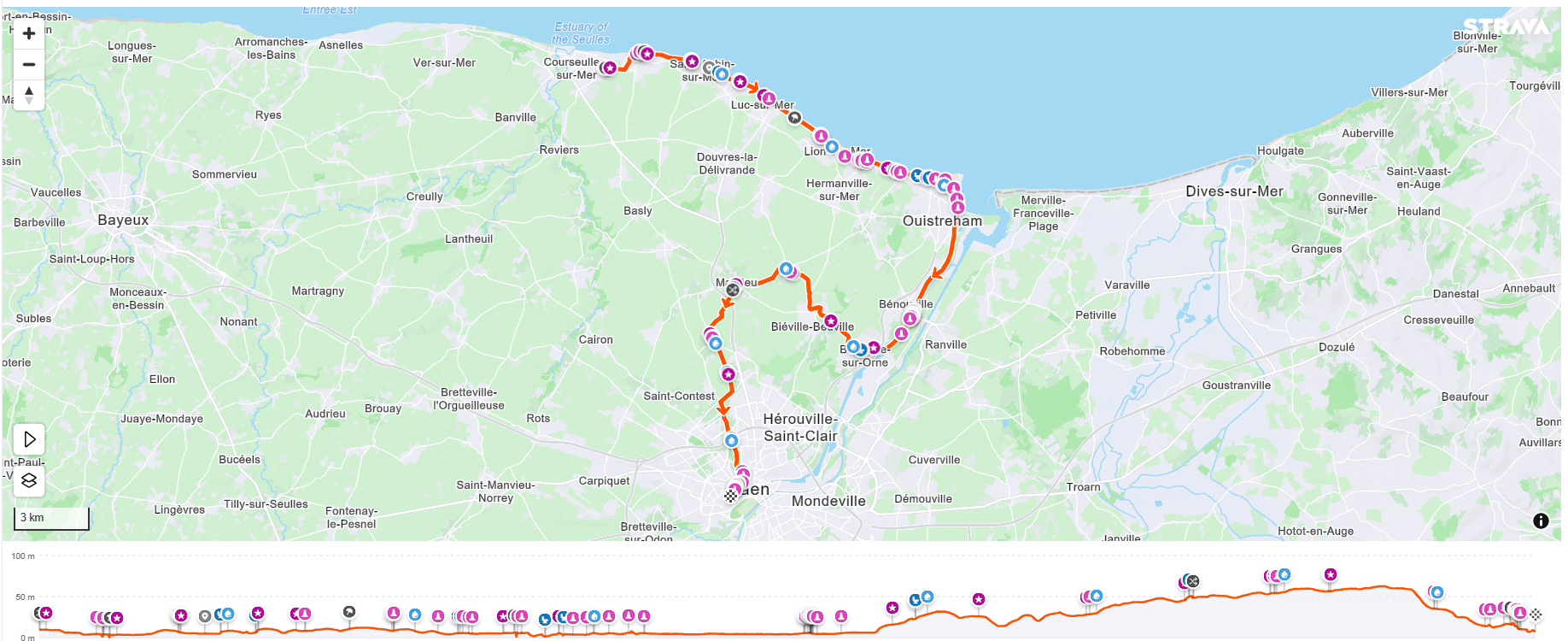
Looking at the elevation profile, one thing stands out immediately: the course is relatively runnable until around kilometer 24.
But don’t mistake it for a completely flat marathon.
Km 0 to km 24: the “comfortable management” zone
The start from Courseulles-sur-Mer naturally creates excitement.
Atmosphere, fresh legs, sea views — everything encourages runners to go out too hard.
And that’s exactly the classic mistake.
The first half of the Marathon de la Liberté is generally smooth and runnable. Elevation changes stay moderate and settling into marathon pace feels relatively easy.
This is the ideal section to:
- lock into your target pace;
- avoid unnecessary surges;
- conserve glycogen;
- keep the effort under control.
If you’re chasing a PB, your success is probably decided here… not by gaining time, but by refusing to lose it later.
Km 24 to km 39: the real deciding section
This is where the race changes character.
The course becomes progressively more uphill.
We’re not talking mountain climbs, of course, but after 2, 3 or even 4 hours of running, long gradual climbs can become expensive.
And this type of terrain is exactly what tends to break rhythm.
Strategic advice:
If you feel good at halfway, don’t attack yet.
Stay controlled between km 24 and km 35.
Accept a few seconds of natural slowdown on the climbs instead of forcing yourself to maintain exact GPS pace.
Many marathoners crack here because they try to “win” the race too early.
On a profile like this, patience beats aggression.
Km 39 to km 42: the release
Good news: the final section trends downhill.
And in a marathon, a gentle descent with less than 3 km to go can almost feel like a gift.
Your quads will probably be heavily fatigued by then.
But mentally, knowing the profile eases toward Caen can make a huge difference.
This is often where runners can:
- slightly pick up the pace;
- feed off the city atmosphere;
- recover a few seconds;
- finish strong if the legs are still responding.
And above all: enjoy it.
Because after 42 km, crossing the finish line in Caen tends to feel pretty special.
Race conditions: don’t underestimate weather and wind
Like many coastal races in Normandy, the Marathon de la Liberté can be influenced by wind conditions.
Depending on the day, some exposed seaside sections may become a meaningful factor.
Quick reminders:
- Headwind: stay economical.
- Crosswind: keep the shoulders relaxed.
- Tailwind: don’t burn your energy too early.
And, of course, always check the forecast in the days leading up to race day.
Normandy weather can surprise you.
Pacing advice for the Marathon de la Liberté
Chasing a PB
Recommended approach:
- conservative start;
- steady pace until halfway;
- smart management from km 24 to km 39;
- progressive acceleration if you still have energy left.
On this profile, a slight negative split is ambitious but achievable for well-prepared runners.
Running your first marathon
Your best friend will probably be restraint.
Yes, even if everything feels easy early on.
Yes, even if your legs feel fantastic.
The marathon often truly begins after kilometer 30.
Save your energy for the second half.
Your future self will thank you.
Best places to cheer runners on the Marathon de la Liberté
Because the course is point-to-point between Courseulles and Caen, spectators should plan their support strategy carefully.
Some particularly interesting locations include:
Courseulles-sur-Mer: experience the energy of the start
Perfect for feeling the excitement before the gun goes off.
The atmosphere is strong and emotions run high.
But runners are still fresh: your support matters, just not yet critically.
Ouistreham: an excellent mid-race location
Ouistreham often offers a great balance.
The runner already has significant mileage in the legs.
External encouragement starts to matter much more.
And the location remains convenient for supporters.
Entering Caen: the mental boost
Approaching the finish completely changes a marathon runner’s mindset.
When fatigue becomes overwhelming, hearing your name, seeing a loved one or receiving encouragement can genuinely revive a race.
If you can only choose one location, the final kilometers around Caen are often your best bet.
The emotional impact there is huge.
Cheer on your loved ones during the Marathon de la Liberté with Cobbr

Following a marathon runner over 42 km is not always easy.
Road closures, approximate split times, transportation and pace changes can quickly make you miss your runner by only a few minutes.
That’s exactly the idea behind Cobbr. The app helps spectators by allowing them to leave a voice notes to their runner.
Instead of chasing the course or guessing passing times, you can organize your support plan more efficiently and turn your role as a spectator into a real strategic advantage.
Because after several hours of effort, a simple “you’ve got this!” at the right moment can make a massive difference.
FAQ – Marathon de la Liberté
Is the Marathon de la Liberté a fast marathon?
Overall, yes.
The first half is relatively fast, but the section between km 24 and km 39 becomes more demanding with a progressively uphill trend.
Is the Marathon de la Liberté suitable for a first marathon?
Yes.
The course remains accessible, the atmosphere is excellent and the organization is well established. The key challenge is managing your effort through the second half.
Where does the Marathon de la Liberté start?
The race starts in Courseulles-sur-Mer.
Where is the finish line?
The marathon finishes in Caen at Stade Hélitas.
What is the elevation gain of the Marathon de la Liberté?
The course features approximately 110 meters of elevation gain.
Is it easy to support a runner on this course?
Yes, but planning ahead is recommended, especially on a point-to-point marathon crossing multiple towns.
When is the best time to cheer for a marathon runner?
Usually between kilometer 30 and the finish line.
That’s often where external support has the strongest physical and psychological impact.